



Reno Slip and Fall Attorney
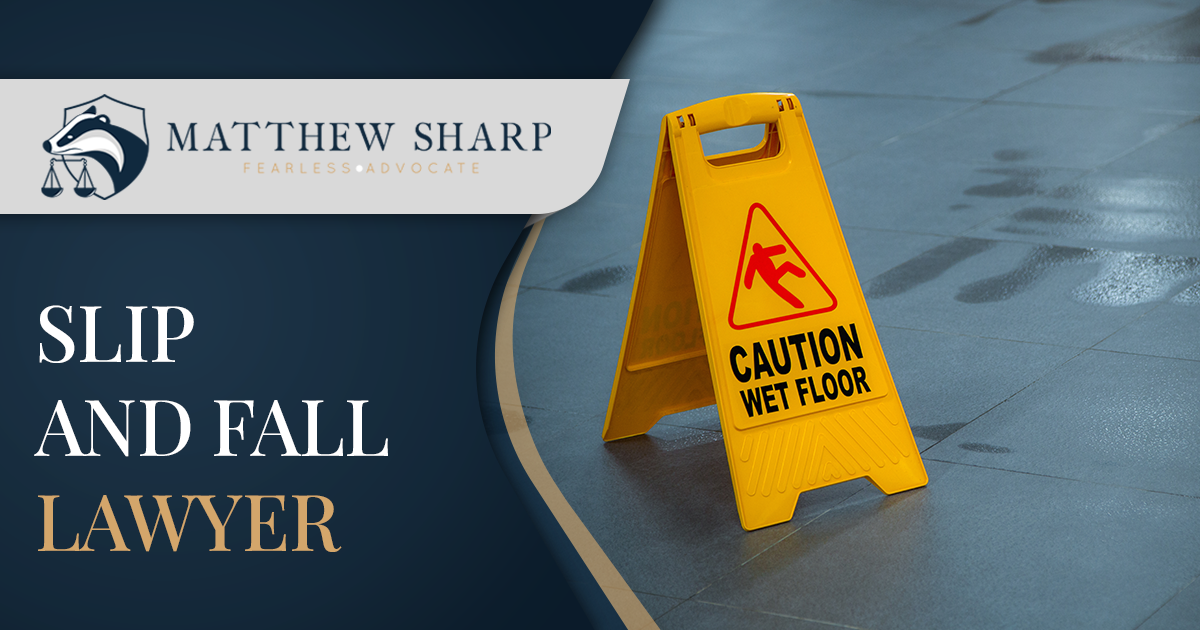
No one enters into a grocery store or downtown casino thinking, “Today is the day I’m going to fall and break my arm.” Unfortunately, serious accidents can happen in any premises outside the home.
The first instinct when this occurs is to accept that it was an accident and seek medical attention.
However, there might be an underlying issue of negligence on the part of the property owner that contributed to the accident. In that case, you might have an actionable claim to seek compensation for any losses.
Proving liabilities in this type of accident requires the support of a skilled Reno slip and fall lawyer like the one you’ll find at the Law Office of Matthew L. Sharp. We have supported many clients who have suffered serious injuries due to an accident that occurred outside of their homes.
That support begins with a thorough investigation into the accident to determine where the negligence occurred and who can be held responsible for the compensable damages.
If you’ve been the victim of a slip and fall accident, it will be important to detail exactly what happened. The following post details how the Nevada state laws view these types of accidents and how you might proceed with a claim.
What Are the Categories of Visitors?
Before you can make a claim in a slip and fall accident, you need to establish what type of visitor you were to the premises. Nevada premises liability laws categorize visitors into three distinct groups. Which of the following applies to your situation?
Invitees
An invitee is anyone who enters a property for the benefit of the owner or to conduct business with the owner. Essentially, that means going into any type of business.
It’s important to note that you don’t have to conduct business to be considered an invitee. In other words, you could go into a casino with the intention of enjoying the buffet, but before you make it to the restaurant, you trip and fall because of the carpeting. You would still be considered an invitee.
The owner of an establishment owes invitees the highest duty of care. That means they must take reasonable steps to identify and rectify any hazardous conditions.
Licensees
Licensees are considered social guests who enter a property with the owner’s permission, but they aren’t there to directly benefit the property owner. This most often applies to private property owners.
For instance, if you go to a party at someone’s house and fall because of a broken step, that property owner could be liable for your injuries.
Trespassers
A trespasser is someone who enters a property without permission. Typically, a property owner does not owe any duty of care to a trespasser if they get injured. However, the owner cannot intentionally harm a trespasser.
There is an exception to the liability of landowners regarding recreational activities on their property.
Nevada law holds that if you are hiking, camping, fishing, or hunting on a property, the landowner does not owe a duty to keep their land safe. In other words, you assume the risk of injury if you’re engaging in recreational activities.
What Are the High-Risk Properties for Slip and Fall Accidents?
There are specific properties in the Reno area that are more prone to slip and fall accidents. These would be the type of properties that have high pedestrian traffic and include the following:
- Grocery stores
- Restaurants
- Bars
- Casinos
- Hotel
- Parking lot
- Garage
- Sidewalks
- Office buildings
- Shopping malls
- Retail stores
- Workplaces
How Do You Prove Premises Liability?
A slip and fall accident falls under the legal category of premises liability. In order to prove your premises liability claim, you and your attorney need to establish the following elements:
A Dangerous Condition Existed on the Premises
A dangerous condition can mean any of the following conditions:
- Broken flooring or stairs
- Broken or missing handrails
- Debris on the floor
- Uneven flooring surfaces, including tiles and carpet
- Grease, water, or other liquids on the floor
- Folded rugs
- Exposed electrical cords or cables
- Limited lighting in walking areas
The Defendant’s Knowledge
You also have to establish that the defendant either knew or should have known about the dangerous condition. For example, if it rains, it is reasonable to assume that customers might track water into a grocery store.
That means rubber mats should be placed by the door during any storm.
An Accident Occurred
You have to establish that the accident occurred on the premises. This can be established with your testimony, an incident report filed at the premises, witness statements, or surveillance videos.
The Dangerous Condition Caused the Accident
This is referred to as causation. In other words, your accident would not have happened if it weren’t for the dangerous condition.
Your Injuries and Damages
Finally, you must provide details of your injuries and all associated damages. Those damages can include all current and future medical expenses, lost wages, and pain and suffering.
What Are the Common Injuries from a Slip and Fall Accident?
When you take a fall, the three parts of the body that are usually injured are the head, neck, and back. The common injuries from a slip and fall accident include the following:
- Deep lacerations and bruises
- Soft tissue injuries, including sprains, strains, and whiplash
- Spinal cord injuries that include slipped discs, broken vertebrae, and nerve damage leading to paralysis
- Fractured knees, elbows, or other joint injuries
- Face or dental trauma
- Broken hands, arms, and hips
- Traumatic brain injuries that range from mild concussions to severe traumatic brain injuries
The Law Office of Matthew L. Sharp assists its clients in determining the extent of their injuries and how they have impacted the injured person’s life.
Frequently Asked Questions
When you are recovering from a slip and fall accident, you’ll want to understand what your options are for filing a claim and being compensated. We can provide you with the guidance you need to make an informed decision about seeking your remedy.
Our guidance begins with the answers to these frequently asked questions:
How does Nevada’s modified comparative negligence rule apply to slip and fall accidents?
Nevada law applies the modified comparative negligence rule to a premises liability action. That means you could be assigned some of the blame in the accident, but still be able to receive compensation, provided you were found to be less than 50 percent at fault. If you are assigned fault, your final settlement will be reduced by the percentage of fault.
Do I need a lawyer for a slip and fall accident?
A slip and fall accident presents its own set of challenges. The claim could be complicated if there were no witnesses or surveillance video. That doesn’t mean you don’t have a case. Our Reno slip and fall lawyer can conduct a thorough investigation into the accident, which includes researching previous violations of the property. If your claim is denied, we might recommend filing a civil complaint. If you agree, we will be fully prepared to represent you in court.
How long can I wait to file my claim?
The Nevada statute of limitations for filing a personal injury claim is two years. The longer you wait to file your claim, the more challenging it will become to establish your version of the accident.
How can I pay my medical bills while waiting for my settlement?
The moment you fall and seek medical care, the bills will start coming in. You might have a limited amount of time before those unpaid bills go into collection. It may be possible to delay collections pending litigation. That is another reason why you need a skilled attorney to act as your advocate.
What would my claim be worth?
Every slip and fall accident is unique. The extent of your settlement depends on whether you need surgery or physical therapy. A typical settlement can range from a few thousand dollars to over $50,000. There are extreme cases that may require lifetime care, which should be compensated for.
Getting Help from a Reno Slip and Fall Lawyer
If you’ve been injured in a fall that happened outside your home, you must consider all your options.
You might immediately think that the accident was your fault. However, when you present the details of the accident to the Law Office of Matthew L. Sharp, we might find that the property owner’s negligence caused the accident.
We will only take up a case like this if we are confident that we can achieve a positive outcome.
Our support starts with a free case review, so call our office to schedule your review with our Reno slip and fall lawyer. Let us help you find the answers you need to move forward.