


Jackknife Truck Accidents
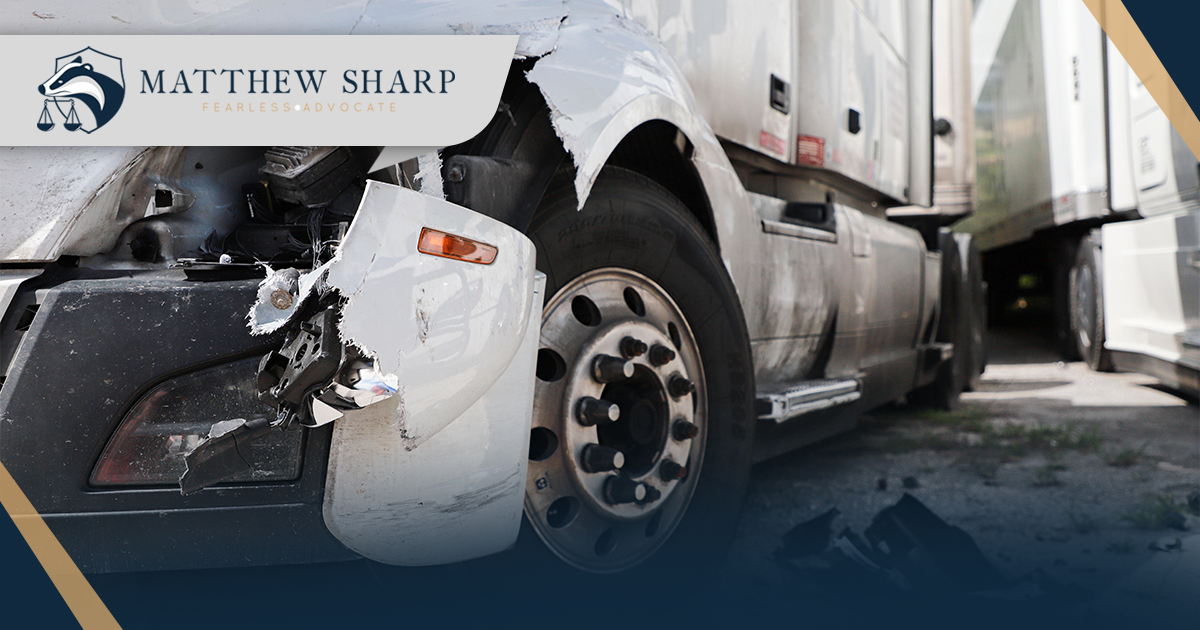
Jackknife truck accidents are some of the most dangerous crashes because they can turn a single tractor-trailer into a sweeping roadblock that cuts across multiple lanes in seconds. A jackknife is when the trailer swings out of line behind the cab, usually after the driver loses traction or control, and the rig folds into a sharp angle.
In Reno, these wrecks happen most often on I-80, at the Spaghetti Bowl interchange area, and on other high-speed corridors where winter weather, sudden slowdowns, and heavy commercial traffic collide.
What’s a Jackknife Crash and Why is It So Dangerous?
A jackknife crash is a loss-of-control event when a swing that can start small rapidly widens until the trailer blocks lanes, pushes into other vehicles, or triggers a pileup.
Here’s the key problem. Once the trailer starts to slide, it can keep rotating because the truck’s momentum keeps moving forward while the tires no longer grip the pavement.
That’s why jackknifes are so often tied to hard braking, slick roads, downhill grades, or a poor driver reaction time. Outcomes commonly include side-swipe collisions, underride risk for smaller cars, secondary crashes from other drivers swerving, and long closures that complicate evidence collection.
For injury victims, it’s not just the initial impact that matters. The chain reaction can multiply damages quickly, and insurers may later argue over which contact actually caused which injury.
Why Do Jackknife Accidents and Collisions Happen?
Jackknifes are pretty straightforward, triggered by a loss of traction or control, but Reno adds local environmental conditions that make them more likely and the consequences more serious.
We have steep grades and changing weather patterns around the region, frequent winter storms affecting I-80 travel, and heavy commercial flow that creates sudden speed differentials.
Most jackknife accidents fall into a few common categories. You can spot these themes early in a claim, then dig deeper as evidence comes in.
- Hard braking in stop-and-go traffic on I-80, especially near the Spaghetti Bowl
- Speed that’s too high for conditions, particularly on slick pavement
- Following too closely, and not leaving enough time to slow gradually
- Uneven or shifting cargo that destabilizes braking and steering
- Tire, brake, or ABS issues that reduce control
- Driver fatigue, distraction, or inexperience in winter conditions
Because jackknifes often start with braking, insurers love to argue that “weather caused it” and treat it like an unavoidable event. Weather matters, but it’s rarely the whole story. Safe driving still means speed control, proper following distance, and equipment in good working order.
The deeper investigation usually focuses on whether the driver and carrier managed risk appropriately for the conditions and the load.
Liability in a Jackknife Truck Accident
Liability in a jackknife case is rarely limited to one person. The truck driver may have made the critical mistake, but the motor carrier’s decisions often set the stage, and maintenance or loading failures can be decisive.
In a typical Reno semi truck crash involving a jackknife, potential responsible parties can include:
- The truck driver, for unsafe speed, improper braking, or failure to keep a safe distance
- The motor carrier, for training gaps, unrealistic schedules, or safety policy failures
- A maintenance provider, if brakes, tires, or other systems were not properly serviced
- A shipper or loader, if cargo security problems contributed to the loss of control
- Another driver, if a sudden, unsafe cut-in triggered the emergency braking system, it could have caused the jackknife
Nevada’s comparative negligence laws also matter in these claims. Under NRS 41.141, a plaintiff generally can’t recover if their comparative negligence is greater than the combined negligence of the defendants, and even then, damages can be reduced by the plaintiff’s percentage of fault.
In practice, this means that insurers push hard to assign you the lion’s share of blame, because crossing that threshold can kill a case.
That’s why early, specific evidence matters. In jackknife cases, good claims usually rely on a clear explanation of how the tractor-trailer collision developed and what driving decisions allowed the trailer to lose traction and swing.
What Insurance Problems Make Jackknife Claims More Complicated?
A commercial vehicle accident is not handled like a standard two-car crash, and jackknifing raises the stakes. These wrecks often involve multiple vehicles, multiple impacts, and high medical exposure. The insurance response is usually faster, more coordinated, and more defensive.
Here are some of the most common insurance challenges that show up in truck accident claims involving jackknifes:
- Multiple policies and players, including a primary policy, excess coverage, and separate policies for the tractor, trailer, or broker
- Complex “who is insured” questions if the driver was leased, dispatched, or drives under someone else’s authority
- Rapid evidence control by the carrier and its insurer, including quick scene response teams
- Disputes about causation, especially when you have secondary impacts or delayed symptoms
- Comparative fault arguments aimed at reducing value or blocking recovery under Nevada comparative negligence rules
Insurance adjusters may focus heavily on minimal visible damage to your car, even though a jackknife-related collision can injure occupants through sudden deceleration, rotation, or being pushed into other vehicles.
They may ask for a recorded statement early, push you toward a fast settlement, or frame the wreck as a weather-driven “no-fault” event.
When Jackknife Accident Claim Negotiations Turn into Possible Bad Faith
It’s normal for insurers to dispute liability and damages. The concern is when an insurer stops acting reasonably, fails to investigate, or uses delay and distortion as a business strategy.
Possible warning signs of insurance bad faith in a truck accident claim can include:
- Unreasonable delays in investigating the accident details, despite clear road closures, police reports, or eyewitness availability
- Ignoring easily obtainable evidence such as traffic cams, dash cam footage, or ECM data
- Misrepresenting policy provisions, coverage limits, or who is insured
- Not evaluating medical documentation in good faith, then repeating the same low-ball offer
- Pushing blame onto you without a coherent explanation, mainly to leverage Nevada’s comparative negligence thresholds
Bad faith analysis is fact-specific, and you typically have to show more than “they offered less than I wanted.” But in high-exposure jackknife cases, you should expect some aggressive legal tactics, so you should document everything. Keep emails, letters, voicemail logs, and notes of what was said and when.
If the claim handling gets strange, those details matter.
Practical Steps After a Jackknife Crash
After a jackknife crash, do the basics early, then add the steps that protect you in a commercial case.
If you can’t do these yourself because you’re injured, a family member can help:
- Call emergency services and get a medical evaluation immediately, even if you feel okay
- Photograph the full scene, including the truck position, skid marks, road conditions, and traffic controls
- Get eyewitness names and full contact information. Jackknife cases often hinge on what others saw first
- Avoid recorded statements to the trucking insurer until you understand your injuries and the facts
- Track treatment, symptoms, missed work, and out-of-pocket expenses from day one
- Act quickly to preserve video and electronic data, because some evidence can disappear fast
Jackknifes can trigger long road closures and require multiple responders. That’s helpful for documentation, but it also means your version of the facts can get lost in the noise unless you gather details early.
Staying Safe and Protecting Your Rights After a Serious Truck Collision
Jackknife truck accidents can be fast, violent, multi-lane hazards that can change lives in minutes.
In Reno, the combination of heavy commercial traffic, winter conditions, and high-speed interchanges makes these crashes a recurring risk. When a trailer swings out and the collision chain starts, the legal and insurance issues that follow often become just as complex as the crash itself.
If you’re dealing with personal injuries, vehicle damage, or missed work after a semi-truck crash, you should expect a sophisticated insurance response and a push toward comparative fault. Build your claim carefully, preserve evidence early, and stay alert for claim handling tactics that cross the line into possible bad faith.
At the Law Office of Matthew L. Sharp, our goal is simple: Get you full and fair compensation based on what actually happened, not what the insurer wishes the facts were.
Contact us today for a free consultation.