


What Can Insurance Cover After Damage from a Wildfire?
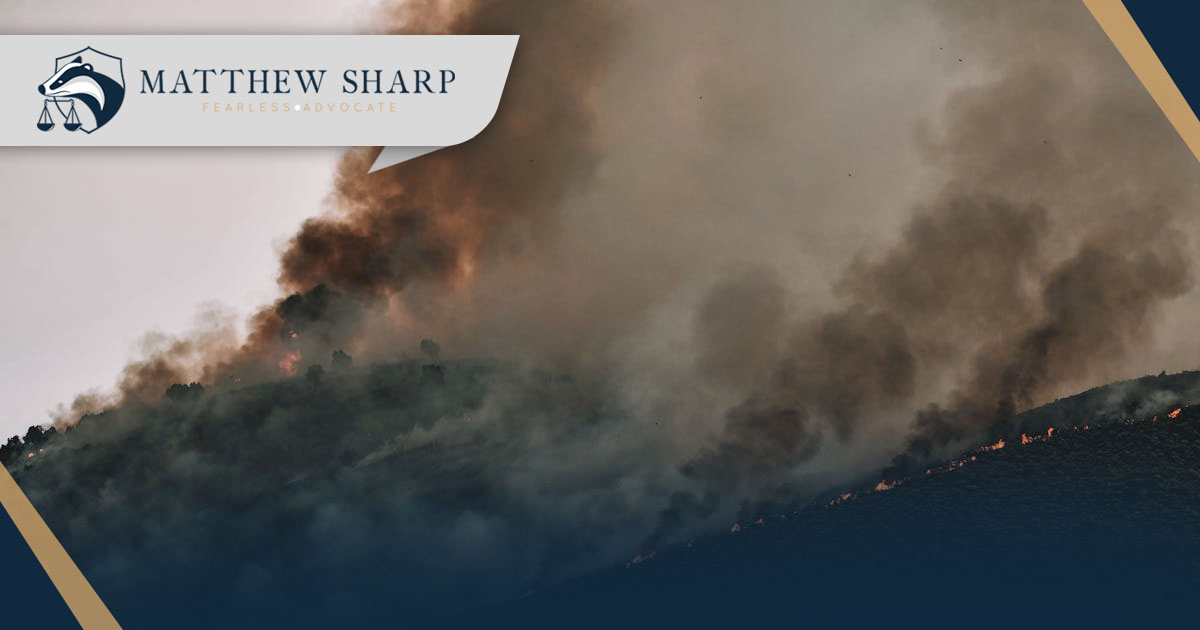
Every fire begins with a spark. Depending on the conditions, that single spark can quickly grow to a blazing inferno, cutting a path of destruction across hundreds of acres. Here in the dry desert of Nevada, conditions are ripe for wildfires year-round.
That’s why every property owner in the state knows the importance of having wildfire insurance.
Unfortunately, there can be confusion with certain policies as to what you can recover from wildfire damage. The time to figure out what your wildfire insurance covers is before the next fire.
Standard Coverage in a Homeowners Insurance Policy
The concept of property fire insurance emerged around 1666 in the devastating aftermath of the Great Fire of London. As early as 1752, Ben Franklin founded the Philadelphia Contributionship, which was the first property insurance company in the U.S.
It wasn’t until 1950 when the Insurance Company of North America launched the first comprehensive homeowner’s policy that they sold as “a complete shield.”
Today, homeowners’ insurance is mandatory for a property being paid for with a loan. The standard coverage in a homeowner’s insurance provides relief from what is referred to as “covered perils.” These are the common covered perils that could be included in your policy:
- Fire or Lightning
- Windstorm or Hail
- Explosion
- Riot or Civil Commotion
- Aircraft
- Vehicles
- Smoke
- Vandalism or Malicious Mischief
- Theft
- Volcanic Eruption
- Falling Objects
- Weight of Ice, Snow, or Sleet
- Power Surges
It is important to note that homeowners’ insurance varies by location.
For instance, Nevada residents wouldn’t need coverage for volcanic eruptions. Once you understand what the covered perils are in your policy, they will provide compensation for losses in the following core areas:
- Dwelling
- Other Structures
- Personal Property
- Liability Protection
- Medical Payments
- Loss of Use
It is important to note what might be missing. As of January 1, 2026, Nevada Assembly Bill 376 allows insurance companies to exclude wildfire coverage in a standard homeowner’s insurance policy.
That doesn’t mean you can’t get protection. You just have to purchase it as a separate policy.
Understanding Additional Living Expenses and Loss of Use
The worst-case scenario in a wildfire will have you evacuating to a shelter. You could be living in that shelter for several days until you’re allowed to return to your property. If your property wasn’t damaged, you can resume your normal routines.
If it were destroyed or became uninhabitable, you might be able to activate the “loss of use” clause in your homeowner’s insurance. This is where the additional living expenses (ALE) will kick in.
ALE helps you maintain your standard of living while your home is being repaired or rebuilt. You can get reimbursed for the following:
- Housing, such as a hotel or temporary rentals
- Food, including restaurant meals
- Relocation expenses that include moving, furniture rental, and utilities
- Miscellaneous things such as transportation, laundry, and pet boarding
Most homeowner’s insurance policies provide ALE payments for reimbursements as opposed to a lump sum. That means you would pay out of pocket for the expenses and then submit receipts to your insurance carrier to be paid back.
The Impact of Smoke and Ash Damage on Your Claim
Flames from a wildfire don’t have to touch your home for your home to be considered damaged. Smoke and ash can impact your property and ability to live comfortably.
Unfortunately, insurance companies are hesitant to pay for these types of claims.
For instance, some insurance companies might assert that smoke or ash is not physical damage but a cosmetic one. They might offer reimbursement for one basic cleaning, but that overlooks the need for deep cleaning. Intense smoke from a wildfire can seep into your home’s insulation and structural materials, which would require intense remediation cleanup.
When it comes to furniture and clothing damaged by smoke, many insurance companies push for cleaning versus replacement. This is another issue that could be spelled out in your policy that you’re not aware of.
Common Reasons Insurance Companies Deny Wildfire Claims
If you think that insurance companies will do whatever they can to avoid making a payment, you’re not wrong. They are in the business of making money, not paying out on claims.
They will always defer to the boundaries of policy, but that can also be open to interpretation. These are the common reasons why insurance companies might deny your wildfire claim:
Documentation Failures
If you fail to provide a detailed inventory as proof of loss or receipts for temporary expenses, you won’t be compensated. You also have to pay attention to any contractual deadline for submitting these forms. If there are restrictions in the policy, it can be a technical ground for denial.
Policy Exclusions and Limitations
Your policy may explicitly exclude certain perils. For instance, after severe hurricanes, many homeowners discover that their policy covers only wind damage, not flooding.
That would be a separate policy even though it happened in the same storm. There could also be issues with your damages exceeding your coverage limits. You can only be paid what your policy dictates.
Property Maintenance and Negligence
Your insurance agency might deny coverage if you did not maintain your property.
There could be stipulations in your policy that dictate how you should handle overgrown vegetation around your property. It might be hard to prove if everything is burnt, but insurance companies will be investigating.
Misrepresentation
Your insurance adjuster will also look for any discrepancies between your actual property conditions and what you reported on your insurance application. For instance, if you built a backyard deck after you purchased your insurance policy but didn’t amend the policy, you might not be entitled to get compensated if the deck is destroyed by a wildfire.
When to Contact an Insurance Bad Faith Attorney
The hope is that after years of paying your premiums on time and never filing a claim, you’ll be able to be compensated after a wildfire damages your home. The reality is that insurance companies might engage in bad-faith practices that require you to get attorneys involved.
The Law Office of Matthew L. Sharp is standing by to provide that support.
If you experience any type of unreasonable denials, persistent delays, or lowball settlement offers, you might be dealing with bad faith insurance. Too often, insurance companies will throw up these roadblocks as a way of discouraging you from pursuing your rightful claim. Our goal is to prevent that from happening with our clients.
You don’t have to be intimidated when going after what you’re due.
If we agree to work together, we’ll step in and take over all the communications with the insurance company. We can cut through the red tape and get an answer.
We’ll also negotiate for a fair settlement that covers all your losses. In the extreme cases when the insurance company won’t negotiate, we might suggest filing a civil complaint. Taking the insurance company to court is not something they want to go through. That could be the motivation to spur them into responsible action.
You don’t have to be discouraged by resistance from your insurance company. Let’s talk about what happened and how the Law Office of Matthew L. Sharp can help. Call to schedule a free case review today.
CLIENT TESTIMONIALS
“I recently retained the professional services of Matthew Sharp and his law firm to represent my interest in a legal proceeding. Mr. Sharp and his firm shall I say was way over the top in providing excellent and sound legal advice. His professional attitude and attention to detail during the entire process was second to none as well as the rapid and courteous responses from Mr. Sharp and his staff to any and all of my questions regarding my case. Furthermore, I would give my utmost support to anyone choosing Mr. Sharp and his firm in any type of legal representation.”
- RICK S.